
 John Theodore Cuthbert Moore-Brabazon was born in London on 8 February 1884, the son of John Arthur Henry Moore-Brabazon and Emma Sophia Moore-Brabazon (née Richards). Educated at Harrow School, he read engineering at Trinity College, Cambridge, but did not graduate. At first fascinated by ballooning, he gained his RAeC Aeronaut's Certificate (No. 8) in late 1907.
Moore-Brabazon's earliest flights were made in France on a Voisin biplane' Bird of Passage' in 1908, and he brought this machine over to England and became the first resident Englishman to make an officially recognized aeroplane flight in England on 2 May 1909, at Shellbeach on the Isle of Sheppey. In 1909 he sold the Voisin to Arthur Edward George and bought a Short Brothers-built Wright biplane. On 30 October 1909, flying the Short Biplane No. 2, he flew a circular mile and won a £1,000 prize offered by the Daily Mail newspaper. Five days later, he achieved the longest flight up to that time accomplished on a British-built machine, covering three and a half miles. He then gained his Aéro-Club de France (No 40) and RAeC Aviator's Certificate, both on 8 March 1910, flying a Short Biplane at Shellbeach.
With the outbreak of war, Moore-Brabazon joined the RFC, receiving a special-reserve commission as a 2nd Lieutenant (on probation) in the 3rd Battalion, The Royal Irish Regiment on 2 December 1914, appointed of Flying Officer (assistant Equipment Officer), and was confirmed in his rank on 11 February 1915. He was promoted to Lieutenant on 19 February 1915 and was appointed Equipment Officer on 31 March, with the temporary rank of Captain. On 1 September 1915, he was promoted to the substantive rank of Captain, with a special temporary promotion to Major on 18 May 1916.
Moore-Brabazon served on the Western Front where he played a key role in the development of aerial photography and reconnaissance. He was decorated as a Chevalier de la Légion d'honneur (Knight of the Legion of Honour), conferred by the President of the French Republic in February 1916 and awarded the Military Cross (MC) on 1 January 1917.
On 1 April 1918, when the Royal Flying Corps merged with the Royal Naval Air Service to form the Royal Air Force, Moore-Brabazon was appointed Staff Officer (First Class) and made a temporary Lieutenant-Colonel. He was promoted to the substantive rank of Lieutenant-Colonel in the RAF on 1 January 1919 in recognition of his wartime services, but relinquished his commission in the Army on 22 March 1919 and retired from the RAF on 22 October.
Post war, Moore-Brabazon became a Conservative Member of Parliament for Chatham (1918 - 1929) and Wallasey (1931 - 1942). He was appointed Minister of Transport in October 1940 and Minister of Aircraft Production in May 1941. He was elevated to the House of Lords as Baron Brabazon of Tara, of Sandwich in the County of Kent, in April 1942 and in 1943 chaired the Brabazon Committee which planned to develop the post-war British aircraft industry. He was president of the Royal Aero Club, president of the Royal Institution, chairman of the Air Registration Board, and president of the Middlesex County Automobile Club from 1946 until his death in 1964. A keen golfer, Moore-Brabazon was captain of the Royal and Ancient Golf Club of St Andrews, the governing body of golf, from 1952 to 1953. He was appointed a Knight Grand Cross of the Order of the British Empire (GBE) in January 1953.
John Theodore Cuthbert Moore-Brabazon, 1st Baron Brabazon of Tara GBE MC PC, died on 17 May 1964 in Longcross, Surrey.
Charles Stewart Rolls was born in Berkeley Square, London, on 27 August 1877, the third son of John Allan Rolls, the 1st Baron Llangattock and Georgiana, Lady Llangattock. After attending Mortimer Vicarage Preparatory School in Berkshire, he was educated at Eton College and then attended Trinity College, Cambridge, where he studied mechanical and applied science. In 1901, along with Frank Hedges Butler and his daughter Vera, he formed The Aero Club, which became the Royal Aero Club on 15 February 1910.
Rolls graduated from Cambridge in 1898 and began working on the steam yacht Santa Maria followed by a position at the London and North Western Railway in Crewe. However, his talents lay more in salesmanship and motoring pioneering than practical engineering; in January 1903, with the help of £6,600 provided by his father, he started one of Britain's first car dealerships, C S Rolls & Co., based in Fulham, to import and sell French Peugeot and Belgian Minerva vehicles. Together with Henry Royce he co-founded the Rolls-Royce car manufacturing firm on 15 March 1906.
A pioneer aviator, he was initially a balloonist, making over 170 balloon ascents and in 1903 won the Gordon Bennett Gold Medal for the longest single flight time. He gained his RAeC Aeronauts Certificate (No. 4) in 1906.
Rolls was one of the earliest proponents of powered aircraft in Britain. During September 1908, he made his first flight with Wilbur Wright at Auvours in France. Wilbur suggested he should start his own flying with glider trials, which he began in a glider built by the Short brothers to a Wright's design, achieving his first successful flight at Shellbeach on 1 August 1909. He bought the first Wright Flyer aircraft built by Short Brothers under licence from the Wright Brothers, which he received on 1 October 1909. Rolls declared he was willing to use these two machines to teach Army officers how to fly providing the War Office grants him permission to use land for trials.
The Army did not start looking for a suitable site for these lessons until October 1909. The 1st choice, Laffans Plain, was unimaginative. Rolls rejected it and refused to fly there as he thought the surrounding terrain was unsuitable, so the Army moved an aeroplane shed from Eastchurch to its training ground on Hounslow Heath. Five months later, with a mind to purchase a second aeroplane, Rolls secretively sold the Flyer to the War Office for £1.000, and it was towed to Farnborough.
Rolls gained his Aéro-Club de France Aviator's Certificate, No 22, on 6 January 1910 and his RAeC Aviator's Certificate on 8 March the same year, flying this machine at Shellbeach. Rolls' next machine, Short No 3, also known as the Rolls Powered Glider No IV (RPG IV), was delivered on 16 March 1910, followed by a French built Sommer and a French built Wright Flyer. Using the latter, he became the first man to make a non-stop double crossing of the English Channel by plane on 2 June 1910.
Eventually the War Office informed Rolls they were building him a shed on Salisbury Plain, next to that which had been erected by Horatio Barber. Unfortunately, he was never to take up occupancy. The Hon. Charles Stewart Rolls was killed on 12 July 1910, in an air crash at Hengistbury Airfield, Southbourne, Bournemouth when the tail of his Wright Flyer broke off during a flying display. He was the first Briton to be killed in an aeronautical accident with a powered aircraft, and the eleventh person internationally.
 Toby Alfred Rawlinson (usually going by Alfred) was born on 17 January 1867 at the family home in Charles Street, Mayfair, in the West End of London, the son of Henry Creswicke Rawlinson and Louisa Caroline Harcourt Rawlinson (née Seymour). He was educated at Eton College and the Royal Military College Sandhurst, after which he was commissioned as a Lieutenant in the 17th Lancers on 6 November 1886, a commission he resigned on 17 August 1892.
A sportsman, Rawlinson he was part of the Foxhunters Hurlingham polo team which won the Olympic gold medal in the 1900 Summer Olympics. He was also a keen motor racing driver, taking part in the 1908 Isle of Man RAC Tourist Trophy race, driving his Darracq into 7th place.
It was only natural that he was attracted by the emerging world of flying and he gained his RAeC Aviators Certificate on 5 April 1910, flying a Farman Biplane at Shellbeach.
At the outbreak of the First World War in August 1914, Rawlinson was 47 and too old to be called up as a reservist. He therefore offered himself and his Hudson sports car to the Royal Automobile Club, who were assembling an "RAC Corps of Volunteer Motor Drivers". Rawlinson was one of twenty-five car owners selected to accompany the British Expeditionary Force to the continent to act as chauffeurs and dispatch carriers for the General Staff. He and the other drivers worked with the British Army in the first battles of the war, his car being adapted by the addition of a machine gun and a Union Jack. By October, he had been transferred to a staff position with IV Corps (which was commanded by his brother Lt.-General Henry Rawlinson) and had been given the rank of Colonel by Sir John French.
On 9 May 1915, he was injured by a German heavy shell at the Battle of Aubers Ridge and returned to England. While recovering at home on 20 June, he was visited by a staff officer from the War Office with a message stating that commissions could not be issued in the field and that he could not consider himself an officer. Rawlinson went straight to the Admiralty and volunteered his services, and on 15 June 1915 was appointed Lieutenant-Commander in the Royal Naval Volunteer Reserve, tasked with raising a new squadron of the RNAS Armoured Car Section. However, in August, he was interviewed by Commodore Murray Sueter RN, who was the Commander of London's anti-aircraft defences, to suggest improvements to the weapons and ammunition in use.
As a result, in September, he was placed under the direct command of Admiral Sir Percy Scott, who had been ordered to establish the London Air Defence Area. Rawlinson was tasked with forming a mobile anti-aircraft battery, using picked men from his armoured car squadron. He set off at once to France, in and obtained an example of the lorry mounted 'Autocanon de 75 mm mle 1913' anti-aircraft gun. This weapon became the nucleus of the Royal Naval Anti-Aircraft Mobile Brigade, under Rawlinson's personal command.
Operating from the stables at Kenwood House, the guns could be rushed to prepared positions around the capital at very short notice. When the army took over the air defence of London in February 1916, the RNVR continued to operate the mobile guns under Army command. Appointed Companion of the Most Distinguished Order of Saint Michael and Saint George (CMG) on 3 June 1916, in August 1916, Rawlinson relocated with the brigade to Norfolk, with the intention of intercepting the Zeppelins as they crossed the coast. Throughout this time, Rawlinson was continually refining the techniques of anti-aircraft gunnery, and claimed to have pioneered the use of acoustic location in detecting aircraft hidden by cloud. In January 1917, the brigade moved to the coast of Essex to counter the threat from German aeroplanes. In May 1917, Rawlinson was offered command of the newly created Western Sub-Command of the London defences, which required a transfer back to the army, with the rank of Lieutenant-Colonel. His new command consisted of 19 gun and 36 searchlight positions. He commanded these assets during the heavy air raids of late 1917.
On 8 May 1917 Rawlinson resigned his commission in pursuance of "an ardent desire to once more get a little closer to the enemy", and on 9 May obtained a transfer to the Intelligence Corps, attached to the Royal Artillery, with the temporary rank of Lt.-Colonel. Assignments include tours of duty in the Caucasus and Eastern Anatolia during 19181922. His mission was to guard the Tiflis-Baku railway, and to oversee the demobilizing Turkish forces. Under Lionel Dunsterville, he was sent on a mission to the Mountainous Republic of the Northern Caucasus. On 12 March 1919 he was awarded the Distinguished Service Order and appointed Commander of the Most Excellent Order of the British Empire (CBE) the same year.
On his last assignment, to establish whether Turkey was obeying the armistice conditions, he and his party were held prisoner in Erzurum by the Turkish authorities. He was eventually released in a prisoner exchange in 1921.
On 22 March 1922 Rawlinson relinquished his commission on completion of service.
When Alfred's older brother Henry died on 28 March 1925, he became the 3rd Baronet, but didn't inherit his brother's barony which became extinct.
Colonel Sir Toby Alfred Rawlinson, 3rd Baronet, CMG, CBE, DSO, died suddenly of natural causes at his flat in Clapham on 1 June 1934.
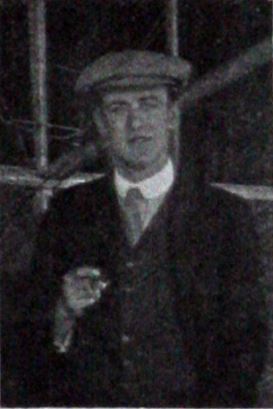 Cecil Stanley Grace was born in Viña del Mar, Valparaiso, Chile on 31 December 1883, the son of John William Grace and Mary Josephine Grace (née Carew) of New York. His uncle, W R Grace, was a former mayor of New York City.
The family, originally from Ireland, moved to England in 1901, though Cecil initially remained behind to finish his education at Columbia University in the City of New York. He arrived in the UK on 1 July 1903. He started a business with his elder brother Percy Russell as Aeroplane Engineers and Pilots, a Stanford, Shellbeach, Isle of Sheppey, Kent, under the name of P R & C S Grace, though this was dissolved on 30 October 1909.
Grace acquired the Short-Wright Flyer No. 5 on 11 January 1910 and gained his RAeC Aviator's Certificate with it on 12 April 1910. A few days before, on 8 April, he ordered a new aircraft, the Short-Sommer No 1 (Short S.27) and his next machine, Short-Sommer No 5 (Short S.32) was delivered on 7 July 1910. In June he had been nominated Short's test pilot and before long began instructing Royal Navy would-be pilots. Grace became a naturalised British citizen on 18 October the same year.
Following the death of Charles Rolls on 12 July 1910, Grace agreed to take up Rolls' commitment to the War Office to train military pilots. However, that was not to be. On 22 December 1910, while attempting to win the de Forest Prize for the longest cross-channel flight completed by the end of the year, flying the Short S.33 belonging to Frank McClean, he disappeared. A body resembling Grace's was found in Ostend harbour on 14 March 1911, but it was too badly disfigured to be identifiable. In March 1911 he was formally declared to have died. He was posthumously awarded the Gold Medal of the Royal Aero Club "for his achievements as a pilot and competitor".
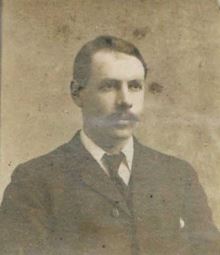 George Bertram Cockburn was born on 8 January 1872 in Birkenhead, the son of George Cockburn and Katherine Jessie Stitt Cockburn (née Bertram). He went to Loretto School in Musselburgh from 1887 until 1892 and in October 1892 entered New College, Oxford to read Natural Sciences, specialising in Chemistry. He graduated in 1895 and on leaving Oxford he went to the Chemistry Laboratory of St George's Hospital in London to work with John Addyman Gardner on the study of fenchones. Between 1897 and 1898 they jointly published four papers in the Journal of the Chemical Society. In 1899 Bertram Cockburn published a fifth paper on fencholenic acids independently of Gardner. By this time, he had received his BSc.
In February 1909 Cockburn was elected to membership of the Royal Aero Club and later that year travelled to France to become the first pupil in Henri Farman's flying school at Châlons-sur-Marne. He made his first flight in June of that year and bought a Farman III, with which he was the only British competitor to enter Grande Semaine d'Aviation at Rheims in August. He represented Great Britain in the competition for the Gordon Bennett Cup but unfortunately crashed into a haystack and was unable to complete the course.
Back in England and by now living at St Mary Bourne near Andover, Hampshire, he gained his RAeC Aviators Certificate on 26 April 1910 flying a Farman Biplane on Salisbury Plain, and in June that year won a prize of £100 in the 'Quick Starting' Competition at the Wolverhampton Air Meet. Although he actively promoted air races as an incentive to develop improvements in aircraft performance, he never flew competitively again following the death of his friend Charles Rolls at Bournemouth. In 1912 he became a founder member of the Royal Aero Club's Public Safety and Accidents Investigation Committee.
Cockburn devoted himself to the training of other pilots. He obtained permission from the army to rent a shed at Larkhill adjacent to Salisbury Plain, from where he and other aviators gave private instruction in flying to army officers. By 1910, he and Captain J B D Fulton had founded the first aerodrome for the Army. In 1911, following the death of Cecil Grace in a flying accident, he volunteered to train the first four naval pilots at Frank McClean's Eastchurch flying ground on the Isle of Sheppey. This he did free of charge while lodging with Maurice Egerton, after which he returned to Larkhill.
In 1914 he was appointed to be an Inspector of Aeroplanes, second in command of the Aeronautical Inspection Directorate of the Royal Flying Corps at Farnborough after J B D Fulton. He was a pioneer of aircraft accident investigations and in 1915 was appointed to the independent post of "Inspector of Accidents", responsible for the Accidents Investigation Branch (AIB) of the Royal Flying Corps. In the New Year's Honours of 1918, he was appointed an Officer of the Order of the British Empire for his services. Shortly afterwards, he became Head of the newly established Accidents Branch of the Department of the Controller-General of Civil Aviation, Air Ministry.
George Bertram Cockburn OBE died at Larksborough near Whitchurch in Hampshire on 25 February 1931.
 Claude Grahame White (no hyphen) was born on 21 August 1879 in Bursledon, Hampshire, the son of John Reginald White and Ada Beatrice White (née Chinnock). He was educated at Crondall House School, Farnham, and Bedford Grammar School.
Claude Grahame Whites (he had yet to append his middle name to his surname) aptitude for engineering was obvious at school. At the age of 16 he convinced his parents to let him train as an engineer. Apprenticed to a firm in Bedford, he built his own bicycle before buying his first car. In 1897 he became one of the founder members of Frederick Simmss Automobile Club of Great Britain and Ireland and, the next year, went to work for his uncle, Francis Willey, a Yorkshire wool magnate at the Shipley Wool Combing Company, where he had several successes, including introducing lorries to replace the companys Shire horses. Recognising the potential of the motor vehicle as a means of public transport, Claude left Shipleys to form the Yorkshire Motor Vehicle Company at the Vaughan Works, Bradford. Unfortunately the business failed due to a lack of skilled drivers, but he managed some notoriety, being prosecuted on 4 April 1901 for 'furious driving' at the astounding speed of between 14 and 16 miles per hour!
In 1900 Claude met the wealthy land-owner George Wilder and his wife. They paid him to buy new cars on their behalf, and teach them how to drive. For three years he was the agent for their 20,000 acre estate, Stanstead Park. Following nine months travelling in South Africa he returned to London circa 1907 to set up his own motor car dealership at No.1 Albemarle Street, importing cars from France. He traded as C. Grahame-White and Co, apparently the first use of the hyphenated 'Grahame-White' surname.
Aviation was in its infancy in the early years of the 20th century. Grahame-White had his own balloon but he disliked being at the mercy of the elements, and soon his attention turned to heavier-than-air flight. He was a member of both the Aéro-Club de France and the Aero Club of Great Britain, and during 1908, while in France on business, he witnessed Wilbur Wright fly. The next year, inspired by Louis Blériot's crossing of the English Channel in 1909, he attended the Reims aviation meeting, at which he met Blériot. He agreed to buy the Type XII Blériot was demonstrating, immediately after the meeting, but the machine unfortunately crashed and was destroyed. Blériot promised him the next available Type XII.
Grahame-White assisted in the construction of his own machine at the Blériot works and took delivery at Issy-les-Moulineaux on 7 November 1909, naming it 'White Eagle'. Although having no flying training of any kind, he succeeded in making several successful flights. He moved to Blériot's school at Pau on 24 November, but unfortunately the machine was wrecked on the 28th, while being piloted by Blériot, with Grahame-White as passenger. Blériot offered to replace it with two of the more conventional Type XI. Flying one of these, Grahame-White qualified for his Aviators Certificate, No. 30, from the Aéro-Club de France, on 4 January 1910, the first Englishmen to do so. He then purchased a further six of the Blériot machines and went on to establish a flying school at Pau. He also gained his RAeC Aviators Certificate, flying his own Blériot at Pau. This was awarded on 26 April 1910, but the qualifying flight must have been well before this, as he had returned to England by then.
Grahame-White returned to England in January 1910, one of the reasons for which was to find a permanent site for his flying school on British soil. He discovered several hundred acres of pasture near Hendon, and acquired an option to purchase it. Returning to France, he determined to compete for the £10,000 prize offered by the Daily Mail newspaper for the first flight between London and Manchester in less than 24 hours. To this end he required something more reliable than the Bleriot and purchased a Farman III biplane. He returned to England on 15 April and his only competitor, Louis Paulhan, a few days later. Ironically Paulhan chose to base his aircraft at the very place that Grahame-White had surveyed for his flying school. The race itself began in the early hours of 27 April. Although Paulhan won the prize, Grahame White's achievement was widely praised, being the first aviator to make a night flight, and he now became a celebrity in England. On 2 July 1910, flying his Farman, he won the £1,000 first prize for Aggregate Duration in Flight (1 hr 23 min 20 secs) at the Midlands Aviation Meeting at Wolverhampton.
July 1910 saw the first aircraft built to Grahame-Whites own specifications, a modified Sommer biplane, which was built by the Windham Detachable Motor Body Co., with which he was hoping to fly from Paris to London. Little more is known.
Grahame-Whites exploits didnt go unnoticed in the United States. J V Martin of the Harvard Aeronautical Society came to Europe in the summer of 1910 seeking aviators to compete in the Boston-Harvard Meet, and he wanted Claude Grahame-White. He got his man with the promise of a $50,000 retainer and all expenses paid. In Boston Grahame-White claimed the blue ribbon event, the 33-mile race from the airfield to Boston Light (in Boston Harbour), for which he won $10,000.
From Boston, Grahame-White went on to Belmont Park, Long Island, New York, to compete for Britain in the Gordon Bennett Aviation Cup race, which he won and for which he was awarded the Gold Medal of the Royal Aero Club. On 14 October 1910, while in Washington, D.C., Grahame-White flew his Farman biplane over the city and landed on West Executive Avenue near the White House. Rather than being arrested Grahame-White was applauded for the feat by the newspapers. Grahame-White remained in America for another month, basking in the limelight.
While in the USA, Grahame-White arranged for an aircraft to be built to his specifications by the Burgess Co., of Marblehead, Mass. This, the 'Baby', was a modified and scaled down Farman type. It arrived at Hendon in January 1911 and made its first flight in February.
On 18 December 1910, Grahame-White was badly injured chasing a prize, offered by Baron de Forest, for the longest nonstop flight from England to the European mainland by a British pilot in an all British aeroplane. He decided to quit competitive flying and invest his money into developing his land at Hendon into London's first aerodrome. By October 1910 a large area had been cleared and other organisations were using the airfield, including a school founded by Louis Blériot. In the beginning of 1911 Claude Grahame-White leased 207 acres of the land at Hendon and created an oval airfield two miles in circumference with associated hangars, workshops and an office block, which quickly became Hendon Aerodrome. There, he transferred his flying school from Brooklands, where it had temporarily relocated from Pau earlier in the year, and formed the Grahame-White Aviation Company to cover his aviation interests.
Grahame-White was also a propagandist. He was always looking for ways to highlight Britain's vulnerability from the air. On 12 May 1911 he gave demonstrations to the Parliamentary Aerial Defence Committee, dropping flour bombs on the painted outline of a battleship, for example. In the summer of 1912 he flew around the country in his 'Wake up England!' campaign. He also wrote widely on the subject, including The Aeroplane in War (1912), with the Daily Mail's air correspondent Harry Harper.
Grahame-White returned to America in August 1911 and on 26 September, at an International Air Meet at Nassau Boulevard Long Island New York, won a prize of $600 in a speed contest for flying his monoplane ten miles at a speed of 61.5 miles per hour. However, his flying in America was cut short. The Wright brothers had filed suit, accusing Grahame-White of breaching their patent. The brothers demanded a full accounting of his 1910 earnings in America. He was summoned to appear before a circuit court judge, who enjoined Grahame-White from any further flying in America.
The Grahame-White Aviation Company had begun building Blériot monoplanes and Farman type biplanes during 1910-11, but it was not until 1913 that a machine of original design was produced. This was the Type VI Military Biplane, the design of which had been initiated by Horatio Barber, who had joined Grahame-White after the closure of the Aeronautical Syndicate Ltd. The design was completed by John Dudley North, who had been an apprentice at the Aeronautical Syndicate, and was to become Grahame-White Aviation's chief designer until he departed for the Austin Motor Co. as superintendent of their aeroplane division in 1915. One exception was the Type IX, designed by Rowland Ding. In 1913, Grahame-White acquired the manufacturing rights for the Morane-Saulnier Types G & H, which were built as the Type XIV. The company's final design before the outbreak of war was its most successful, if anachronistic. The Type XV was an updated version of the 1910 era Farman 'Boxkite' which, with continuous improvements, remained in production until 1917.
Following the outbreak of WWI, Grahame-White offered his services and received a temporary appointment as Flight Commander in the Royal Naval Air Service on 10 August 1914. Hendon Aerodrome and the hangars, workshops and aircraft of the Grahame-White Aviation Company were requisitioned under the Defence of the Realm Act, becoming a station of the RNAS.
Initially limited to aircraft repair, in October 1914 the company was awarded its first wartime contract for production of the BE2c aircraft and began a huge expansion programme, reportedly employing 1,000 staff by August 1915, and resulting in the construction of a new factory on the Hendon site which opened in 1916.
Meanwhile, on the night of the 5th/6th September 1914 Grahame-White and Richard Gates made the first night patrol over London in response to the threat of bombing from German airships. Grahame-White saw further action when he participated in the attack on Ostend and Zeebrugge. This was the biggest raid of the war to date, with squadrons from Dunkirk, Dover and Hendon taking part. In appalling flying conditions he was forced to ditch into the sea five miles off the Belgian coast and was eventually picked up by a French minesweeper. On returning to England he heard conflicting reports that he had drowned in the Channel or been shot as a spy in the Tower of London!
Grahame-White resigned his commission on 29 June 1915 and focused his efforts on aircraft production, expanding his factory and employing more staff. Orders were received for Breguet V bombers, built as the Grahame-White Type XIX. Further contracts followed for construction of the Avro 504 and DH.6 aircraft and by the end of 1917, after further expansion, the factory site covered 50 acres. In April 1917, having trouble finding sufficient accommodation for his employees, Grahame-White gained approval from the Welfare Department of the Ministry of Munitions for a proposal for an ambitious housing scheme to the west of the aerodrome. Named Aeroville, only one square was built, as the company was in no position to proceed with the rest of the development in the climate of uncertainty over the future of Hendon following the end of the war.
During WWI, the Grahame-White Company encountered many problems along the way: checks were made by naval personnel rather than aircraft specialists leading to the rejection of perfectly sound components. The contract for the DH.6 turned into a fiasco when sources for silver spruce dried up, and they were supplied with totally unsuitable swamp cypress by the Government. Having borrowed heavily from both his uncle and the Admiralty to fund wartime expansion, Grahame-White faced mounting debts as his factory stood idle due to shortage of raw materials. The cumulative effect of years of relentless hard work and successive frustrations contributed to a nervous breakdown in December 1917, and a period of six weeks spent in hospital.
The summer of 1918 saw several government contracts changed or cancelled, and following the Armistice of November 1918 all outstanding contracts were suspended or cancelled pending a decision on the future of the Royal Air Force. This was extremely costly and frustrating for Claude who had claims of over £400,000 lodged with the Treasury. Out of necessity, one of his hangars became an auction house for war-surplus vehicles, and he turned his wood-working department to furniture production. In this way he was able to keep his factory fully operational and all of his staff in employment. He also discovered a lucrative business in refurbishing war-surplus Rolls-Royce Silver Ghost chassis.
In 1919 a young man called Francis Lewis Wills (b. 3 Aug 1893, d. September 19180), who had served as a RNAS Observer, approached Grahame-White with an idea for a new kind of business, which would keep them both in the air. Despite his financial difficulties, Grahame-White somehow had the capital to help found a new company, Aerofilms Ltd, which was registered on the 9th May 1919. His contribution to the venture was to provide £3,000 and premises at Hendon. By the end of 1920, the young firm had taken nearly 2,400 aerial photographs for their clients, everything from south coast seaside resorts for postcard manufacturers, to factories for captains of industry. By 1939 Aerofilms had used nearly 63,000 glass plate negatives to capture unique views all over Britain and Ireland.
The Grahame-White company had some small success with post-war aircraft designs to the design of M. Boudot, but effectively that side of Grahame-White's business was over and company ceased aircraft manufacturing operations in 1920. In the same year the company was renamed the Grahame-White Company Ltd. Like many other aircraft companies in the post war slump, Grahame-White turned to the production of automobiles. By 1919 he had ready the GW Buckboard, priced at £95, but Grahame-White's attempts to make a truly simple vehicle coincided with the announcement of the £100 Carden, and no more was heard of the Buckboard. The company then set about turning it into a slightly more sophisticated cyclecar. Unfortunately very few were made, and Grahame-White ceased its operations completely in 1924.
Meanwhile, the London Flying Club at Hendon opened its doors on the 1st July 1919, but it was a flying club without an airfield as that was still in the hands of the government. During a visit to the USA in 1922, Grahame-White heard that without notice the Treasury had appointed a Receiver to his company, taken possession of his factory and discharged his employees. Grahame-White countered with a legal action intended to recover his own wartime losses, as well as the purchase price for Hendon. Although he eventually won this case, the Treasury would not settle until Grahame-White threatened to expose the facts in the Daily Mail.
Grahame-White had got his money but decided to leave aviation behind him. His post-Hendon life involved extensive travel, often aboard his private yacht Ethleen, and time spent living abroad. In 1925 he became agent for American Baby Gar speed boats, he wrote several books on aviation with Harry Harper, and branched out into property and real-estate investment. His only role during the Second World War was as a fire-watcher during the air raids.
Claude Grahame-White died on 19 August 1959 in Nice, France.
 Alexander Ogilvie was born on 8 June 1882 in Marylebone, London, the son of Arthur Graeme Ogilvie and Caroline Mary Ogilvie (née Agnew). He was educated at Rugby School and Cambridge University.
In 1908 Ogilvie had watched Wilbur Wright carry out a demonstration flight in France, and within two months he had ordered a Wright Biplane for himself. Before the biplane was delivered in 1909 he practised flying at Friston, Sussex using a glider. Ogilvie established a flying base on Camber Sands near Rye, Sussex and took part in a number of aviation meetings around the country. He joined the Royal Aero Club on 11 May 1909 and gained his RAeC Aviators Certificate on 24 May 1910 flying his own Short-Wright biplane No 2 at Camber Sands, which he had received on 1 October 1909. In 1910, using a Wright racing biplane, he entered the Gordon Bennett competition at Belmont Park in New York, where he was placed third in the competition (for which he was awarded the Silver medal of the Royal Aero Club).The following year he had further success in that race, coming in fourth in his Wright at an average 55 mph. In 1912, Ogilvie invented an airspeed indicator which was later adopted by the RNAS.
On 19 February 1915 Ogilvie was commissioned as an RNAS officer in the rank of Squadron Commander and was initially given responsibility for overseeing flying training at the Naval Flying School, Eastchurch. On 5 April 1916 he took command of the aircraft repair depot at Dunkirk, and was promoted acting Wing Commander on 31 December 1916. On 5 March 1917 he became a member of the Air Board, eventually serving as controller of the technical department. The rank of Wing Commander was confirmed on 30 June 1917.
On 1 April 1918, along with all other RNAS personnel, Ogilvie transferred to the newly established Royal Air Force in the rank of Major (temporary Lieutenant-Colonel).
Ogilvie resigned from the Air Board in 1919, being placed on the RAF unemployed list on 10 March that year.
On 1 January 1918 Ogilvie was appointed Officer of the Order of the British Empire (OBE) and on 1 January 1919 appointed Commander of the Order of the British Empire (CBE) in recognition for valuable service rendered in connection with the war.
Post war, he then worked as a consulting aeronautical engineer under the name "Ogilvie and Partners", which in 1919 became the Limited company "Ogilvie and Partners Ltd.", with offices at Gwydir Chambers, 104, High Holborn, London. He subsequently moved to Australia for some years.
Lieutenant-Colonel Alexander Ogilvie CBE, FRAeS, died on 18 June 1962 at his home in Ringwood, Hampshire.
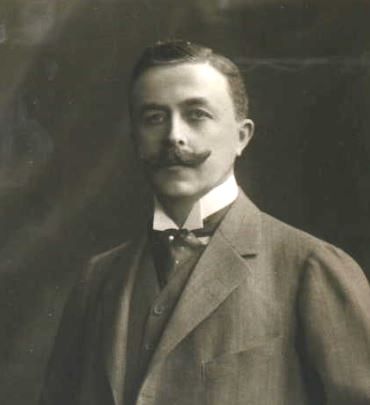 Adam Mortimer Merrit Singer was born on 25 July 1863 in Yonkers, Westchester, New York, the son of Isaac Merritt Singer, the founder of the Singer Sewing Machine Company, and Isabella Eugenie Singer (née Boyer). Shortly after Mortimer's birth, his parents moved from New York to Paris, and then, following the outbreak of the Franco-Prussian War in 1870, to Oldway Mansion in Devon. He attended Downing College, Cambridge, in 1881, but left the university without taking a degree. While originally born an American citizen, he naturalised as a British subject in 1900.
Singer's first passion was thoroughbred horses, but he was also a keen sportsman and a pioneer in the early development of cycling, driving, and flying in Europe. He gained his RAeC Aeronauts Certificate (No. 12), possibly before 1910, then in January 1910 became the twenty-fourth person in France to hold a pilot's certificate from the Aéro-Club de France, and gained his RAeC Aviator's Certificate on 31 May the same year, flying a Farman biplane.
In the following years, he offered a series of awards for the development of British aviation, including a £500 bounty for the first practical British-built amphibious aircraft, won by the Sopwith Bat Boat in 1913.
Singer acquiring a country estate at Milton Hill, near Steventon, Berkshire, and two days after the outbreak of the First World War he offered the recently rebuilt house as a military hospital for soldiers and NCOs; it grew to a 220-bed facility, the largest of the privately run wartime hospitals, and treated over 4,500 men. Singer and his brother Washington underwrote the entire operating costs of the hospital, and Singer worked throughout the war as its chief administrator. His wife worked as matron-in-chief.
After the war, Singer became a Justice of the Peace, was made a Knight Commander of the Order of the British Empire, and in 1921 he served as the High Sheriff of Berkshire. Sir Adam Mortimer Merrit Singer, KBE, JP, died on 24 June 1929 in Middlesex.
 Samuel Franklin Cowdery (later known as Samuel Franklin Cody), was born on 6 March 1867 in Davenport, Iowa, USA, the son of Samuel Franklin Cowdery and Phoebe Jane Cowdery (née Van Horn).
Although not much is known about his early life, he attended school until the age of 12 and was listed in the 1880 Davenport City Directory as being a horse trainer. By 1881 he had gone to Montana and was breaking in horses. His ability to handle even the most temperamental mount provided a self-assurance and self-possession he would never lose. He later claimed to have prospected for gold in an area which later became Dawson City, centre of the famous Klondike Gold Rush, though this is very much in doubt.
In 1888, Cody started touring the US with Adam Forepaughs New and Greatest All-Feature Show and Wild West Combinatio as a sharpshooter. He married Maud Maria Lee in Norristown, Pennsylvania, and the name Samuel Franklin Cody appears on the April 1889 marriage certificate. They were on the road for two years until Forepaugh succumbed to influenza and his heirs sold off the show.
Cody arrived in England in 1890, claiming to be the son of the well-known William "Buffalo Bill" Cody, though in fact the two were unrelated. Cody, together with his wife, toured England with a shooting act. Maud Cody returned to America, and Cody, along with Mrs Elizabeth Mary King and her sons toured the music halls, which were very popular at the time, giving demonstrations of his horse riding, shooting and lassoing skills. Elizabeth used the name Lela Marie Cody and was generally assumed to be his legal wife, though the marriage of Cody and Maud was never legally dissolved.
While touring Europe in the mid-1890s, Cody capitalized on the bicycle craze by staging a series of horse vs. bicycle races against famous cyclists. Cycling organizations quickly frowned on this practice, which drew accusations of fixed results. By 1898, Cody had become interested in melodramas and produced a successful five-act play he called The Klondike Nugget, capitalizing on the gold rush in the Yukon Territory that began a year earlier.
It is not clear why Cody became fascinated by kite flying. Cody liked to recount a tale that he first became inspired by a Chinese cook who, apparently, taught him to fly kites whilst travelling along the old cattle trail. However, it is more likely that Cody's interest in kites was kindled by his friendship with Auguste Gaudron, a balloonist Cody met while performing at Alexandra Palace. Cody showed an early interest in the creation of kites capable of flying to high altitudes and of carrying a man. Lela's son Leon also became interested, and the two of them competed to make the largest kites capable of flying at ever-increasing heights. The younger son Vivian too became involved after a great deal of experimentation.
Financed by his shows, Cody significantly developed Lawrence Hargrave's double-cell box kite to increase its lifting power, especially by adding wings on either side. He also developed a sophisticated system of flying multiple kites up a single line, which was capable of ascending to many thousands of feet or of carrying several men in a gondola. He patented his design in 1901, and it became known as the Cody kite.
Balloons were then in use for meteorological and military observation, but could only be operated in light winds. Cody realised that kites, which can only be operated in stronger winds, would allow these activities to be carried out in a wider range of weather conditions. His kites were soon adopted for meteorology, and he was made a Fellow of the Royal Meteorological Society.
In December 1901, he offered his design to the War Office as an observation "War Kite" for use in the Second Boer War, and made several demonstration flights of up to 2,000 ft. in various places around London. A large exhibition of the Cody kites took place at Alexandra Palace in 1903. Later, he succeeded in crossing the English Channel in a Berthon boat towed by one of his kites. His exploits came to the attention of the Admiralty, who hired him to look into the military possibilities of using kites for observation posts. He demonstrated them later in 1903, and again on 2 September 1908, when he flew them off the deck of battleship HMS Revenge. The Admiralty eventually purchased four of his War Kites.
In 1905, using a radically different design looking more like a tailless biplane, Cody devised and flew a manned "glider-kite". The machine was launched on a tether like a kite, and the tether was then released to allow gliding flight. The design showed little similarity to his earlier kites, but had more the appearance of a tailless biplane. It was notable in being the first aircraft to use ailerons (in fact they were elevons) effectively to control roll.
Cody eventually managed to interest the British Army in his kites. In 1906, he was appointed Chief Instructor of Kiting for the Balloon School in Aldershot and soon after joined the new Army Balloon Factory down the road at Farnborough, along with his purported son Vivian. The Factory would eventually become the Royal Aircraft Establishment, and Vivian Cody would go on to a long and successful career as a technical specialist. In 1908, the War Office officially adopted Cody's kites for the Balloon Companies he had been training. This group would in due course evolve into the Air Battalion of the Royal Engineers.
Finally, in 1907, he created an unmanned "power-kite". Somewhat similar to his standard kite but with bigger wings and a tailplane with twin fins in place of the rear cell, this was fitted with a 15 h.p. Buchet engine. It was not allowed to fly free; Cody strung a long aerial wire down the length of the Farnborough Balloon Shed and flew it indoors.
All that remained to him was to bring together the manned free-flying glider and the power-kite's engine to create Britain's first aeroplane.
Before Cody could turn his newfound skills to aeroplanes, he was required to help complete an airship then under construction in the Farnborough Airship Shed. In December 1906, he was despatched to France, where he purchased a 40 h.p. Antoinette engine. During 1907, he was given full authority as the designer of the airship's understructure and propulsion system. On 5 October 1907, Britain's first powered airship, the British Army Dirigible No 1 Nulli Secundus, flew from Farnborough to London in 3 hours 25 minutes, with Cody and his commanding officer Colonel J E Capper on board. After circling St Paul's Cathedral, they attempted to return to Farnborough, but 18 m.p.h. headwinds forced them to land at Crystal Palace. There, the airship was damaged by the high winds.
Later in 1907 the Army decided to back the development of his powered aeroplane, the British Army Aeroplane No 1 (aka Cody No 1, Cody Flyer or Cody Cathedral). After just under a year of construction, he started to carry out taxiing trials of the aircraft during September 1908, briefly leaving the ground on the last of these. The aircraft was then returned to the workshop for the first of a long series of modifications to be made. The small ailerons were removed, a nose wheel added, the radiators moved outboard from their central position to the forward interplane struts, and modifications were made to the booms supporting the elevator. In this form, with a Union Jack flying from the strut between the upper and lower tail booms, the aircraft was presented to the press at Farnborough on 13 October. After further ground trials Cody finally judged conditions suitable for a flight trial on 16 October, and made the first recognised powered and sustained flight in the United Kingdom, which covered only 1,390 ft.
The machine was damaged at the end of the flight. After repairs and extensive modifications, Cody flew it again, early in 1909. The War Office then decided to stop backing development of heavier-than-air aircraft, and Cody's contract with the Army ended in April 1909. Cody was given the aircraft, and continued to work on the aircraft at Farnborough, using Laffan's Plain for his test flights.
On 14 May 1909, he succeeded in flying the aircraft for over a mile, establishing the first official British distance and endurance records. By August 1909, Cody had completed the last of his long series of modifications to the aircraft. He carried passengers for the first time on 14 August 1909: first his old workmate Capper, and then Lela Cody. King George V began to frequent Codys flying exhibitions, and Cody got in the habit of landing his plane just a few feet from the monarch. Although he was criticized for this in the press, the king loved it and pronounced him Colonel Cody. On 16 October 1909, Cody finally became a naturalised British subject.
On 29 December 1909, Cody became the first man to fly from Liverpool in an unsuccessful attempt to fly non-stop between Liverpool and Manchester. He set off from Aintree Racecourse at 12.16 p.m., but only nineteen minutes later he was forced to land at Valencia Farm near to Eccleston Hill, St Helens, close to Prescot because of thick fog.
Cody gained his RAeC Aviator's Certificate on 7 June 1910, using a newly built biplane. He won the Michelin Cup for the longest flight made in England during 1910 with a flight of 4 hours 47 minutes on 31 December. In 1911, a third aircraft was the only British machine to complete the Daily Mail's "Circuit of Great Britain" air race, finishing fourth, for which achievement he was awarded the Silver Medal of the RAeC in 1912. The Cody V machine, with a new 120 h.p. engine, won first prize at the 1912 British Military Aeroplane Competition Military Trials on Salisbury Plain. He had first prepared a monoplane, the Cody IV, for the trials, but it was badly damaged in a crash before the trials began.
Cody continued to work on aircraft using his own funds. On 7 August 1913, he was test flying his latest design, the Cody Floatplane, at Ball Hill, Laffans Plain near Farnborough when it broke up at 200 ft. He and his passenger, the cricketer William Evans, were not strapped in and were thrown out of the aircraft and killed. The Royal Aero Club accident investigation concluded that the accident was due to "inherent structural weakness", and suggested that the two might have survived the crash if they had been strapped in. Cody's body was buried with full military honours in the Aldershot Military Cemetery; the funeral procession drew an estimated crowd of 100,000.
 Although normally referred to as Launcelot D. L. Gibbs, he was born Louis Dwarris Launcelot Gibbs in June 16, 1885, the son of Thomas Frederick Gibbs and Julia Elizabeth Gibbs (née Dunn). As he usually went by Launcelot (and not Lancelot as sometimes misrepresented), quite likely writers of the period just assumed the first L stood for Launcelot. However, to confuse matters further, in the 1911 census, while living at The Downs, Eling, he referred to himself as Launcelot Louis Dwarris Gibbs, while his wife was Isolda Dwarris Gibbs, inferring Dwarris Gibbs as a family name. This even followed through into In The London Gazette, in its bankruptcy declarations, gives one Louis Dwarris-Gibbs living at The Downs, Eling!
Educated at Little John's, Greenwich, he joined service in 1905, as 2nd Lieut. Duke of Connaughts Own Hampshire and Isle of Wight Regt. of Artillery. In 1906 he was sent to H.M. Balloon Factory, Aldershot, for an aeronautical course in kites and ballooning and on 24 May 1908 transferred to the Royal Field Artillery and was sent back to H.M. Balloon Factory in conjunction with Lieut. Dunne's tailless experiments and later to Blair Athol where the first flight was made.
Some time after these experiments, he left the RFA and worked as an independent demonstration pilot in both England and France, where he gained his Aéro-Club de France Certificate (No 82). In April 1910, Gibbs flew from Paris to do demonstration flying at Durango, in Spain, on April 24th, 25th, and 26th. Unable to demonstrate due to the weather, the crowd turned ugly and burned both the hanger and Gibbs' Farman. He gained RAeC Aviators Certificate on 7 June 1910 and the same month formed L D Gibbs and Co., Ltd., with premises at 166, Piccadilly. The company initially acted as agents for Cecil Grace and Graham Gilmour, as well as Gibbs himself, but by May of 1911, with refinancing by Ellice Victor Elias Sassoon, was renamed the Universal Aviation Co, Ltd and began manufacturing machines of their own.
The new company provided tuition under chief pilot H J D Astley and supplied aircraft and aviators for demonstration work. It produced the Birdling monoplane in 1911, virtually a copy of a Bleriot XI, first appearing as a competitor in the Daily Mail Circuit of Britain Race of July, 1911. The second machine, a biplane known variously as the Birling Biplane or Birdling-Sommer, may well have been an imported Sommer biplane rather than an original design. However, the company did not prosper, and by 1912 was in liquidation.
At the outbreak of war, Gibbs returned to the RFA from 1914, where he remained until he joined the British War Mission in the United States of America on June 27, 1917. Post war it appears that he was no longer involved in aviation, styling himself as an import/exporter, travelling extensively between Britain and the United States. It appears that he retired to Portugal in 1935, but returned from there some time before his death on 6 December 1945 in Liskeard, Cornwall.