
Aviator's Certificates 81 to 90
81 Robert William Philpott
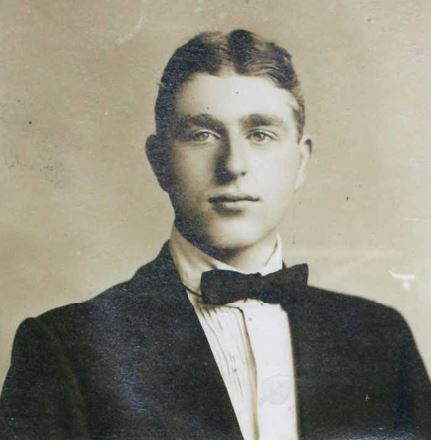 Robert William Philpott was born on 17 July 1890 in Martock, Somerset, England, the son of Albert William Phillpott and Elizabeth Ellen Phillpott (née Tulk). He learned to fly at the Bristol School at Larkhill, Salisbury Plain, and gained his RAeC Aviator's Certificate on 9 May 1911, flying a Bristol Biplane. In September he joined the Scottish Aviation Company at Barrhead as chief pilot instructor. Only two people were trained by the company and it ceased operation in 1912 after a disastrous fire.
By 1939 he was living in Darlington as a motor mechanic.
Robert William Philpott died in 1970 in Islington.
82 Wilfred Herbert Dolphin
 Wilfred Herbert Dolphin was born on 8 May 1882 in Aston, Warwickshire, son of Alick Herbert Dolphin and Annie Marion Dolphin (née Henville). An automobile engineer, by 1907 he had become the chief motor engineer to H.H. the Nizam of Hyderabad. Returning to England, probably in late 1909, he gained his RAeC Aviators Certificate on 9 May 1911, flying a Hanriot Monoplane at Brooklands, returning to India with his family on 2 September that same year.
Dolphin was commissioned as a 2nd Lieutenant in the Indian Army Reserve of Officers on 20 January 1916, promoted to temporary Lieutenant on 22 January 1917. Seconded to the RFC on 24 August 1916, he was posted as a Flying Officer to 14 Reserve Squadron, Catterick, on 3 January 1917. Posted to X Aircraft Park Abbassia as Officer in Charge, Rigging on 30 April, on 28 November he was posted to 3 School of Military Aeronautics at Heliopolis and appointed Examining Officer, graded as Flight Commander and with the temporary rank of Captain.
Dolphin was appointed Equipment Officer, 1st Class on 26 January 1918 and transferred to the RAF on its formation with the temporary rank of Captain. He was appointed Acting Major from 11 March. He was conferred The Order of the Nile, 4th Class by His Highness the Sultan of Egypt on 15 July 1919 and awarded a permanent commission in the RAF on 1 August, with the rank of Captain, simultaneously regraded as Flight Lieutenant with the introduction of the RAFs own ranking system the same day.
In February 1920 he was transferred to Technical duties, Aircraft Park/Aircraft Depot, India, with the rank of Flight Lieutenant, returning to the UK in a similar role in September that year with No 2 Flying Training School, Duxford. He resigned from the Indian Army Reserve of Officers on 1 May 1922 and was permitted to retain the rank of Lieutenant.
On 24 November 1922, Dolphin was transferred to the Aircraft Depot, Egypt and in September 1923, now Squadron Leader, became Officer Commanding 14 Squadron in Ramleh, Trans-Jordan. He was to spend the next few years as Squadron Leader in various posts in the Middle East, India and finally Malta, before returning to the UK on 15 September 1931 to become Senior Equipment Staff Officer, HQ Fighting Area, Uxbridge with the rank of Wing Commander. In November 1933 he transferred to Engineering Duties, RAF Gosport, finally being placed on retired list on 20 January 1936.
In retirement, Wing Commander Dolphin became CO of Brighton RAFVR in January 1939. He was commissioned as a Temporary Lieutenant Commander, RNVR, on 5 August 1941 and later Acting Commander, RNVR on 15 January 1944.
Post war, he appears to have emigrated to South Africa where he died on 16 May 1974 in Cape Town, Western Cape.
83 Cecil Hoffnung Marks
 Cecil Hoffnung Marks was born on 3 Dec 1887 in Hampstead, London, the son of Major Claude Laurie Marks and Caroline Marks (née Hoffnung). He was educated at Eton and the Royal Military College Sandhurst, after which he was commissioned in the Middlesex Regiment as a 2nd Lieutenant on 29 August 1906, becoming a Lieutenant in the 3rd Battalion on 7 November 1909.
Marks gained his RAeC Aviator's Certificate on 9 May 1911, flying a Farman Biplane at Brooklands.
Transferred to the RFC Reserve of Officers on 17 April 1913, he was appointed Flying Officer on 5 August 1914 and posted to 6 Squadron at Farnborough. The squadron did not embark to the continent until 7 October, moving to Belgium but soon relocating to France. After returning to the UK, on 29 March 1915 he was posted to 9 Squadron at Brooklands in the capacity of an instructor and wireless expert, and appointed Flight Commander, with the temporary rank of Captain, on 19 June. On 19 October, transferred to 13 Squadron and, confirmed in the rank of Captain, he returned to France.
Captain Cecil Hoffnung Marks was killed in action on 23 October 1915. He had been engaged in an escort and reconnaissance patrol when a German fighter, piloted by Hans-Joachim Buddecke, shot down his BE2c in the vicinity of Saint Quentin. His observer, Lieutenant Will Lawrence, brother of Lawrence of Arabia, perished with him - the first two casualties sustained by the squadron.
84 Seaton Dunham Massy
 Seaton Dunham Massy was born on 25 Apr 1882 in Fulham, London, the son of Lt. Col. Charles Francis Massy and Alice Massy (née Seaton). He was commissioned as 2nd Lieutenant in the Yorkshire Regiment on 8 January 1901 and served in South Africa 1901-2. He then transferred to 29th Punjabis as a Lieutenant on 5 September 1903. He was Double Company Officer from 5 September 1903 and Adjutant from 23 November 1908. He was promoted to Captain on 8 January 1910.
Massy gained his RAeC Aviator's Certificate on 9 May 1911, flying a Bristol Biplane at Salisbury Plain, becoming the first Indian Army officer to qualify as a pilot on attachment to the Air Battalion. He returned to India in 1912 to establish a School of Aeronautics.
During 1913 Massy, along with three other Indian Army officers, returned to the UK to attend a course of instruction at the Central Flying School. On 1 February 1913, Massy was appointed to command the newly created Indian Central Flying School at Sitapur in Uttar Pradesh, though remaining in England. With the rank of temporary Flight Commander, he assumed command of the Reserve Aeroplane Squadron, Farnborough on 1 October 1914. This unit, which was to become 30 Squadron in March 1915, transferred to Egypt on 3 November. Massy was appointed Flight Commander on 5 March 1915 in charge of C Flight and then on 13 May was appointed in command of the Squadron, with the rank of temporary Major. The squadron relocated to Basra on 7 December 1915.
On 3 June 1916 Massy was appointed a Companion of the Distinguished Service Order (DSO) and returned to England on 4 January 1917 to become Commander of 23 Wing. He was awarded the Order of the Nile in January 1920.
Major Seaton Dunham Massy, DSO died 10 May1922 in Marylebone, London.
85 Frederick Phillips Raynham
 Frederick Phillips Raynham was born on 15 July 1893 in Honington, Suffolk, the son of James Kistruck Raynham and Minnie Raynham (née Phillips). He was educated at Ark House School, Banbury until at least 1906. Early in 1909 he was an office worker at the Harper Adams Agricultural College, Newport, Shropshire but in October got his first job in aviation, with J V Neale at Brooklands.
Raynham learned to fly at the A V Roe School at Brooklands and gained his RAeC Aviator's Certificate on 9 May 1911, flying a Roe Biplane. He worked for both Roe and Sopwith as an instructor but by November he had joined L Howard Flanders Ltd at Brooklands. On 24 October 1912, in pursuit of the British Empire Michelin Trophy No.1 for the longest flight by a British pilot in an all-British aircraft, he flew for 7.5 hr in an Avro G. He seemed to have won the £500 prize, only for Harry Hawker to set a longer time just an hour later. This seemed to set the tone for Raynham's competitive flying career.
Raynham test flew for A V Roe, replacing Wilfred Parke. There he made the first flight of the Type 504 on 28 July 1913. With sponsorship from the Yorkshire Evening Post, on 2 October 1913 Raynham took part in a race dubbed 'The War of the Roses', between Avro's Type 504 and their Yorkshire rival, Blackburn, with their Type I. The race was over a 100 mile course and Raynham flew with Humphry Roe as passenger, while Blackburn flew with his Type I's owner, M G Christie, as passenger. Though for the most part the race was 'neck and neck', a precautionary landing by Raynham gave Blackburn the win.
On 4 February 1914 Raynham attempted the British solo height record but, although he reached a height of 15,000 feet, no observers we present to ratify the attempt. Six days later, with RAeC observers present, be broke the record with passenger, reaching 14,420 ft.
Raynham left Avro in 1916 to pursue a career as a freelance test pilot. His first assignments were with BristolBristol, followed by Martinsyde, and he remained the Martinsyde test pilot until the closure of the firm.
The Daily Mail offered £10,000 for the first non-stop flight across the Atlantic. Raynham was one of several British aviators competing, but his Martinsyde Raymor biplane (named for Raynham and his navigator Charles Fairfax Morgan) crashed, overladen, on take-off from St John's, Newfoundland on 18 May 1919. Raynham was uninjured, but Morgan was hospitalised. With the aircraft rebuilt, and Lt. Conrad Biddlecombe replacing Morgan, Raynham tried again on 17 July, but with the same results. Luckily this time no one was seriously injured.
Back in Europe, Raynham competed in the 1920 Gordon Bennett trophy at Etampes in a Martinsyde Semiquaver, though engine failure prevented a finish. In the Kings Cup Race of 1922, flying his own Martinsyde F.6, he came a close second to F L Barnard. Also in 1922 Raynham flew the longest duration British glider flight (113 minutes) at the Itford Hill competition. His position looked strong to be the overall winner, but his time bettered almost immediately by Alexis Maneyrol, who took the £1,000 first prize. Raynham did receive both the Ogilvie prize of £50 and the 1922 Britannia Trophy for his flight.
Raynham joined Hawker's as their test pilot in 1923, meanwhile also test flying for Handley Page during 1923 24. He remained with the Hawker company until 1925.
By July 1925 Raynham had joined Ronald Kemp's Aircraft Survey Co in India, and, following a major commission, the pair formed the Indian Air Survey and Transport Co. in 1928. As a result, he flew widely in India and the Far East; he and his wife spending most of the period 1925 to 1938 abroad. He was appointed an Officer of the Order of the British Empire (OBE) in 1935.
During the Second World War he was granted an honorary commission in the RAF as Wing Commander and worked at the Air Ministry as a member of the Air Accident Board from 1940 to 1943.
Frederick Phillips Raynham OBE died suddenly from a stroke on 30 April 1954 in Colorado Springs, Colorado, whilst on a six-year caravan tour of the USA with his wife.
86 James Lindsay Travers
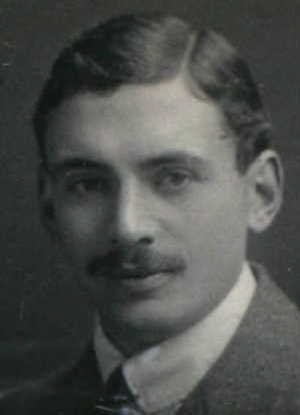 James Lindsay Travers was born on 8 November 1883 in Kensington, London, the son of James Lindsay Travers snr and Emma Louisa Travers (née Gardner). Educated at King's College, London, from 1902 to 1906, he was an apprentice at Legros and Knowles Engineering Works, Willesden, from 1906 to 1909. He was elected a Graduate of the Institute of Automobile Engineers in 1907, and was transferred to Associate Member in 1912.
Travers was employed as a draughtsman at the Royal Engineer's Balloon Factory, Farnborough, in 1909, working chiefly on wind balances for wind tunnels. Later that year he became assistant to Professor A K Huntington (Alfred Kirby Huntington b. 18 January 1852 - d. 17 April 1920) in aviation experiments at Eastchurch, following which he undertook his own aviation experiments. In 1910 he built a three cylinder rotary engine that he fitted to a monoplane he had built himself at Eastchurch.
In 1911 Travers was appointed as designer and assistant to Short Brothers, Eastchurch, where he worked on aeroplanes, floating devices and early twin-engined aeroplanes. He learned to fly at the Grahame-White School at Hendon and gained his RAeC Aviator's Certificate on 16 May 1911, flying a Farman Biplane, following which he flew passengers and raced for the Graham-White Company in 1911-1912.
On 13 February 1913 Travers was commissioned as a Sub-Lieutenant in the Royal Navy Reserve, and, appointed to the Royal Flying Corps (Naval Wing), was posted to Calshot Naval Air as a Flying Officer on the 19th. He was promoted to Lieutenant (RNR) on 19 February 1914, to Flight Commander in the newly formed Royal Naval Air Service on 1 July 1914 and to Squadron Commander on 31 December 1914. Appointed Commanding Officer of Calshot Naval Air Station in 1915, he was then posted to Felixstowe in 1916 at the express wish of Commander John Cyril Porte with the task of investigating the problems of handling seaplanes on ships.
By June 1917 Travers was appointed to the Air Department of the Admiralty to assist Wing Commander John Sedden in the testing of new types of flying boat. He was appointed Officer Commanding test flight at the Isle of Grain Test Depot. It was during this time that he took a renewed interest in wing-sections. As early as his 1910 tubular-steel monoplane he had experimented with thick wings at Eastchurch.
On 1 January 1918 Travers was promoted to Wing Commander and on its formation on 1 April 1918, he received a temporary commission in the RAF with the rank of Lt.-Colonel, becoming Wing Commander when the RAF introduced its own ranking system on 1 August 1919. However, on 11 September he was transferred to the unemployed list.
In 1920 Travers secured a job with the Civil Aviation Department of the Air Ministry in charge of Technical Information under the Controller General of Civil Aviation at the Air Board, and in this capacity represented the Air Ministry at events and conferences across Europe. The following year, though, he was offered a senior appointment as Technical Adviser to Chilean Naval Air Service to advise on the training and expansion of its own naval air service.
During 1923 Travers became involved with the idea of designing his own advanced flying boat and spent much time on this project. His experience with Short (and which Short seems seldom to have acknowledged) had provided him with both the technical expertise and the practical experience necessary for such a task.
Some years before he went to Chile Travers had designed a small monoplane in order to experiment with thick, high-lift wing-sections. In his absence a close friend, Major Arthur Quex Cooper, undertook the construction of the machine to his drawings. By this time, though, Travers thoughts had progressed from mere wood to the notion of the metal monocoque structure. Cooper spent two years building the aircraft in a small workshop shed in the back garden of his home in Hutton near Brentwood in Essex.
Travers returned to Britain around mid-January 1924 and took a cautious approach to the task of test flying of what was now called the Cooper-Travers Hawk. On 14 February 1924 he made the first flight at Croydon, but, attempting a turn, the aircraft dived into the ground.
Wing Commander James Lindsay Travers Junior, OBE, Assoc. M. Inst. C.E was killed instantly.
87 Edward Hotchkiss
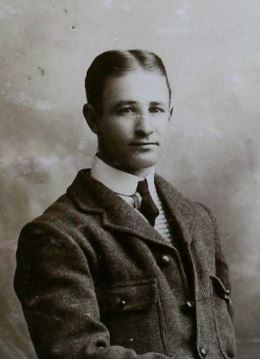 Edward Hotchkiss was born on 2 June 1883 in Shipton, Shropshire, the son of Henry Hotchkiss and Ellen Hotchkiss (née Bromley). A native of Craven Arms, he later lived in Oswestry where he was a brewer at Messrs Dorsett, Owen & Co. He learned to fly at the Bristol School at Larkhill, Salisbury Plain and gained his RAeC Aviator's Certificate on 16 May 1911 flying a Bristol Biplane. He took over the Bristol School at Brooklands as manager and chief instructor.
Hotchkiss was commissioned as a 2nd. Lieutenant in the RFC Special Reserve on 27 July 1912. On 10 September Hotchkiss was killed at Wolvercote, Oxfordshire, together with Lt. C. A. Bettington when their Bristol-Coanda Monoplane, s/n 263, of 3 Squadron, RFC, crashed due to the failure of a quick release cable fitment, which caused the fabric of the starboard wing to fail. This accident was traced to one of the bracing wires becoming detached, and it resulted in a five-month ban of flying of all monoplanes by the military wing of the RFC.
88 Thomas Charles Reginald Higgins
 Thomas Charles Reginald Higgins was born on 21 July 1880 in Turvey, Bedfordshire, the son of William Francis Higgins and Fanny Adela Higgins (née Wilby). Higgins attended Dartmouth Naval College before joining the battleship HMS Camperdown on 15 January 1897 as a midshipman, followed by the battleship HMS Majestic on 31 October 1899.
On 20 January 1900 he was allowed to withdraw from the Royal Navy and on 4 March 1900 he joined the British Army and was commissioned as a 2nd Lieutenant in The King's Own (Royal Lancaster Regiment). He saw active service in the Transvaal, Natal and on the Zululand Frontier during the Second Boer War, and was promoted to Lieutenant on 25 July 1900. From 2 April 1904 to 22 April 1909 Higgins was seconded to overseas service as part of the West African Frontier Force. He was promoted to Captain on 10 July 1907.
After his return to Great Britain, he gained his RAeC Aviator's Certificate on 16 May 1911 flying a Farman Biplane at Hendon. He was once again seconded to the West African Frontier Force on 1 September 1911, being restored to establishment of Kings Own (Royal Lancashire Regiment) on 24 January 1913.
Higgins attended the Central Flying School, commencing 17 September 1913. Promoted to Major on 1 September 1915, he was seconded to the Royal Flying Corps and appointed Flying Officer on 14 September. Just 7 days later, he embarked for France and was posted to 9 Squadron, graded as Flight Commander from 19 October. On 24 January 1916 he returned to the Home Establishment and was transferred to 19 Reserve Squadron, later renamed 39 (Home Defence) Squadron, as Acting Squadron Commander on 29 January, confirmed in the post on 1 March.
On 25 June Higgins was appointed Wing Commander, with the temporary rank of Lt-Colonel, and on 14 September assumed command of 22 Wing. On 6 March 1917 he was appointed Group Commander, with the temporary rank of Colonel, commanding the Home Defence Group and, from 1 September 1917, temporary Brigadier-General, commanding VI (Home Defence) Brigade.
On its formation on 1 April 1918, Higgins received a temporary commission in the RAF with the rank of Lieutenant-Colonel, becoming Officer Commanding 7 Group on 1 July 1919. On 1 August he was awarded a permanent commission in the RAF as a Lieutenant-Colonel (Group Captain when the RAF introduced its own ranking system the same day).
Promoted to Air-Commodore on 30 June 1922, Higgins served as Director of Training and Staff Duties at the Air Ministry from 1 September 1922, a post he relinquished on 24 April 1926 on becoming Chief Staff Officer in Iraq. On 6 April 1928 he was appointed Air Officer Commanding No. 10 Group before retiring on 1 November 1929.
Higgins was appointed Companion of The Most Distinguished Order of Saint Michael and Saint George (CMG) on 1 January 1919, Companion of The Most Honourable Order of the Bath (CB) on 1 January 1926 and Deputy Lieutenant of Bedfordshire on 1 October 1931.
Following the outbreak of WW2, on 2 September 1939 Higgins relinquished rank of Air-Commodore on being re-employed as Deputy Inspector-General of Ground Defence, with the rank of Group Captain, followed by Officer Commanding, RAF Regiment Depot. From 2 to 7 December 1942 and 7 to 14 June 1943 he was temporary AOC No 72 Group. He reverted to the retired list on 17 July 1945, resuming his rank of Air Commodore.
Air Commodore Thomas Charles Reginald Higgins, CB, CMG, DL died on 22 September 1953 in Bedford, Bedfordshire.
89 William Dawson Beatty
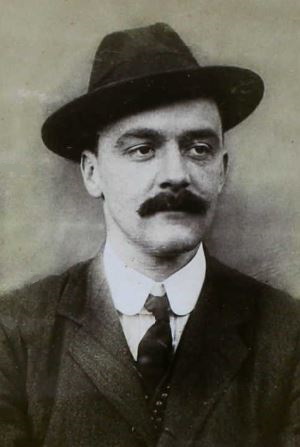 William Dawson Beatty was born on 16 May 1884 in Darjeeling, West Bengal, India, the son of Thomas Beatty. On 21 December 1901 was commissioned in the Royal Engineers as a 2nd Lieutenant, promoted to Lieutenant on 4 August 1904, at which point he was serving in Singapore. Returning to England, on 1 August 1909 Beatty was appointed to the Royal Arsenal, Woolwich as Railway Traffic Manager.
Beatty gained his RAeC Aviator's Certificate on 30 May 1911, flying a Roe Biplane at Hendon. He was promoted to Captain on 21 December 1912. He was seconded to the RFC on 15 April 1913, graded Flying Officer. Graded as Flight Commander on 1 June 1913, from 8 August he was appointed Officer in charge of Stores.
Following the outbreak of WWI he transferred to an Aircraft Park in France on 16 August 1914 and on 9 November was appointed Squadron Commander and promoted to temporary Major. On 31 December he was made Assistant Commander of the Aircraft Park Advanced Base, Commander from 5 March 1915. On 3 June 1915 he was promoted to Brevet Major and on 16 June became Deputy Assistant Quarter Master General. On 31 October 1915 he was made Chief Inspector AID and promoted to temporary Lt-Colonel, but on 13 November was transferred to be temporary Assistant Director War Office, becoming Deputy Assistant Director of Military Aeronautics in March 1916 and finally Assistant Director of Military Aeronautics. He was promoted to Major on 21 December 1916.
On 12 April 1916 Beatty was conferred with the Third Class of the Order of St. Anne by His Majesty the Emperor of Russia in recognition of valuable services rendered, and on 22 August 1917 was appointed Chevalier de la Légion d'honneur (Knight of the Legion of Honour), conferred by the President of the French Republic.
Meanwhile, on 13 August 1917 Beatty had relinquished the post of Assistant Director of Military Aeronautics to become to be Officer Commanding, 55 Squadron, relinquishing his temporary rank of Lt-Colonel and returning to Major. He transferred again the following month to be Officer Commanding 27 Squadron.
On its formation on 1 April 1918, Beatty received a temporary commission in the RAF with the rank of Lt-Colonel and was employed at the Ministry of Munitions. He was appointed an Officer of the Order of the British Empire (OBE) in the 1919 Birthdays Honours and awarded a permanent commission in the RAF on 1 August 1919 as a Lt-Colonel (Wing Commander when the RAF introduced its own ranking system the same day), appointed Controller of Aerodromes and Licencing in the Department of the Controller General of Civil Aviation. He was appointed a Commander of the Order of the British Empire (CBE) and awarded the Air Force Cross (AFC) on 10 October 1919.
Beatty was put on the retired list on 1 January 1920 and was awarded the Order of Military Merit, Class III, conferred by H.M. the King of Spain on 22 November.
Wing Commander William Dawson Beatty CBE, AFC died on 19 May 1941 in Egypt.
90 Richard Bell Davies
 Richard Bell Davies (also known as Richard Bell-Davies) was born on 19 May 1886 in Kensington, London, the son of William Bell Davies and Mary Emma Davies (née Beale). Davies was orphaned by the age of six and was brought up by an uncle, a doctor. He attended Bradfield College in Berkshire arriving in September 1899 and leaving in April 1901. Davies enlisted in the Royal Navy in 1901 joining training ship HMS Britannia as a cadet on 15 May. On 15 September 1902 was posted as a cadet to the protected cruiser HMS Diana, serving with the Mediterranean Fleet, and promoted to Midshipman on 15 October. He served aboard HMS Magnificent in the Channel, before being promoted to Sub-Lieutenant on 15 December 1905 and promoted to Lieutenant on 30 June 1908.
Davies had been impressed while serving in the battleship Dominion during 1910 when he saw Grahame-White fly over the fleet at Sheerness. He promptly joined the Royal Aero Club to find out more about aviation and obtain his own copies of Flight magazine but, since his ship was short of officers, he felt it unlikely that he could be selected early for flying training at Eastchurch. However, he saw an advertisement for Grahame-White's flying school at Hendon and decided that his best chance of learning to fly would be to apply for a course during his Easter leave. He learned to fly with the Grahame-White school, instructed by Clement Greswell, and gained his RAeC Aviator's Certificate on 30 May 1911 flying a Farman Biplane.
Davies was posted to China aboard HMS Minotaur on 28 June 1911, but was allowed to return home with a view to joining the Flying Corps. He was appointed to HMS Actaeon for an aviation course on 10 October 1912 (see Samson for details of HMS Actaeon), and left Hong Kong on 4 December 1912, returning home via Canada. On 17 April 1913 he was seconded to the RFC (Naval Wing) as a Flying Officer and posted to HMS Hermes, additional as a Flying Officer for the Naval Flying School. He was promoted to Flight Commander on 10 July and to Squadron Commander on 24 November.
On 29 May 1914, Davies posted to HMS Pembroke, additional for Special Service, and was sent to Somaliland to report as to the use of aircraft in an expedition against Mohammed Abdullah Hassan, 'The Mad Mullah'. However, any further actions in the area were interrupted by the outbreak of WWI.
On 1 July 1914 the Naval Wing of the RFC became the Royal Naval Air Service and Davies was appointed Squadron Commander in the new service. He was posted to HMS Pembroke III, additional for the Royal Navy Flying School, Eastchurch. Following the outbreak of WWI, Davies was with the Eastchurch (Mobile) Squadron under Wing Commander Samson, flying Sopwith 3-Seat Tractor Biplane s/n 33. The squadron was posted to Immingham on 9 August to carry out patrol duties, then Skegness on the 11th before returning to Eastchurch on the 24th. The squadron then embarked for Ostend on 27 August and then to St.Pol by 1 September, at which point it was renamed No 3 Squadron RNAS, and Davies took over command.
In the early days of the war, Davies, along with Richard Peirse, carried out a number of raids on German submarine bases at Ostend and Zeebrugge. In particular on 23 January 1915, with Davies flying Maurice Farman s/n 1240, they each discharged eight bombs in an attack upon submarines alongside the mole at Zeebrugge, at the outset of which Davies was severely wounded by a bullet in the thigh. Both were appointed to the Distinguished Service Order (DSO). Davies was then posted to the Dardanelles in March 1915, and was awarded the Victoria Cross on 1 January 1916 for an action at Ferrijik Junction, in Bulgaria near the border with Ottoman-controlled Europe, on 19 November 1915, when, flying Nieuport Type 10 s/n 3172, he saved the life of Flight Sub-Lieutenant Smylie, who had crash landed in marshland under enemy fire. The citation reads :
Promoted to Wing Commander on 1 January 1916, Davies was posted as Commanding Officer of RNAS Killingholme on the 24th. On 5 June he was posted to No 3 Wing RNAS at Manston, Kent, flying to France in July. He was promoted to Lt. Commander in the Royal Navy on 30 June.
Concerned about his career prospects in the Royal Navy by remaining too long with the RNAS, and following a directive banning operational flights by officers of Wing Commander rank and above, Davies applied to the Admiralty for a naval posting. He served upon the seaplane tender HMS Campania as senior aviation officer from 10 January 1917, then HMS Furious from 29 April 1918.
In September 1918 the Admiralty instructed Admiral Phillimore, RAA Grand Fleet, to organise flying trials aboard HMS Argus with a view to getting her into service as quickly as possible. HMS Argus was the first example of the standard pattern of aircraft carrier, with a full-length flight deck that allowed wheeled aircraft to take off and land. Phillimore ordered Davies to take charge of the trials and gave instructions to Rosyth Dockyard that it was to do anything he asked. Argus was commissioned in Beardmores yard at Dalmuir on 14 September 1918. On 24 September 1918 Davies made history by making the world's first landing on a flush-deck aircraft carrier.
On its formation on 1 April 1918, Davies received a temporary commission in the RAF with the rank of Lt.-Colonel, but resigned his commission on 7th May 1919 and returned to the Naval Establishment.
Mentioned in Despatches twice, Davies received many decorations for his contributions to the war effort:
| 27 March 1917 : | awarded the Croix de Guerre avec Palme by the President of the French Republic. |
| 21 April 1917 : | appointed Chevalier de la Légion d'honneur (Knight of the Legion of Honour), conferred by the President of the French Republic. |
| 17 March 1919 : | awarded the Order of Michael the Brave, Third Class, conferred by the King of Romania. |
| 10 October1919 : | awarded the Air Force Cross (AFC). |
| Date | Text to be indented |
Davies was steadily promoted and appointed to higher positions over the next twenty years:
Promoted to Commander on 1 January 1920:
In command HMS Eagle from 3 February to 8 August 1920.
In charge of the Air Section of the Naval Staff from 11 November to 7 February 1924.
Executive Officer of HMS Royal Sovereign in the Atlantic Fleet from 8 April 1924 to 8 April 1926.
Promoted to Captain on 31 December 1926:
In charge of the Air Section of the Naval Staff, 1 May 1926 to 25 June 1928.
Chief Staff Officer to the Rear Admiral commanding the 1st Cruiser Squadron in the Mediterranean, 4 April 1929 to 2 June 1930.
Liaison Officer for the Fleet Air Arm at the Air Ministry, 2 March 1931 to 17 January 1933.
In Command of HMS Cornwall on the China station 10 March 1933 to 25 October 1935.
In Command of the naval base at Devonport (HMS Drake), 30 February 1936 to 13 April 1938.
Appointed Naval Aide-de-Camp to The King from 2 June 1937.
Promoted to Rear Admiral on 11 January 1938:
Rear Admiral, Naval Air Stations, based at RNAS Lee-on-Solent (HMS Daedalus) 1939 to 1941.
Appointed a Companion of the Order of the Bath (CB) in the King's Birthday Honours of 1939, Davies was promoted to Vice Admiral upon retiring on 29 May 1941. He then joined the Royal Naval Reserve (RNR) with a reduction in rank to Commander. As an RNR officer, he served as a Convoy Commodore, and as Commissioning Captain of the escort carrier HMS Dasher and the trials carrier HMS Pretoria Castle. He left the RNR in 1944.
Vice Admiral Richard Bell Davies, VC, CB, DSO, AFC died on 26 February 1966 at Lee-on-Solent, Hampshire.